
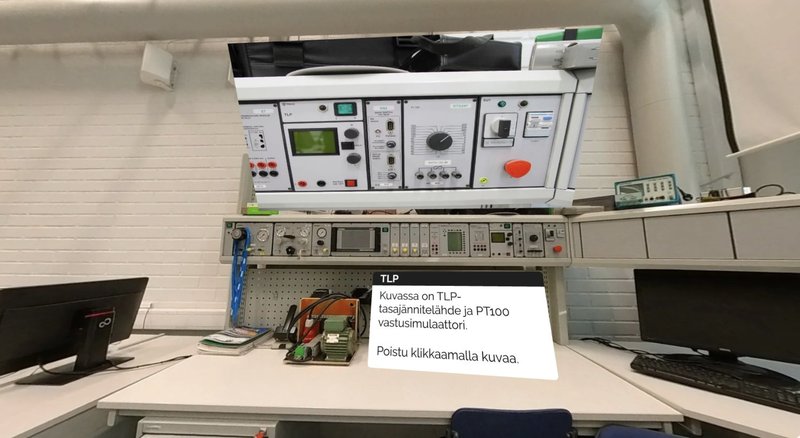
With the rise of hybrid education, the need for diverse learning environment solutions has grown significantly. Centria University of Applied Sciences has responded by diversifying its learning environments and pedagogy. At Centria, virtual learning environments are one way to support students' varied study paths and ensure consistent quality of teaching regardless of the mode of delivery.
As the shift in learning environments accelerated by the COVID-19 pandemic took hold, an increasing number of students now attend classes through distance or hybrid formats. Janne Torvikoski, Centria's Digital Pedagogy Specialist, notes that the change has largely become permanent. At Centria, it is considered important to support students' diversified study paths through different teaching methods. The VR learning environments for electrical laboratories, co-developed by Centria and 3DBear, are an excellent example of supporting hybrid learning paths. In the electrical and automation engineering program, the majority of students are hybrid learning students. They live in different parts of Finland and participate in teaching primarily remotely. The experience of hands-on laboratory work gained through VR learning environments is particularly valuable, as time during on-site intensive periods is limited.
"During the first laboratory visit, students' valuable time is wasted getting familiar with safety procedures and locating equipment. VR environments allow us to get straight to work during in-person sessions," explains Kari Saaranen, Lecturer in Electrical and Automation Engineering at Centria. Kari sees time- and location-independent, safe familiarization with laboratory environments as important for students. "Beginners often don't know the general rules, and VR environments give them the opportunity to review and practice as many times as they want and have time for," Kari continues.
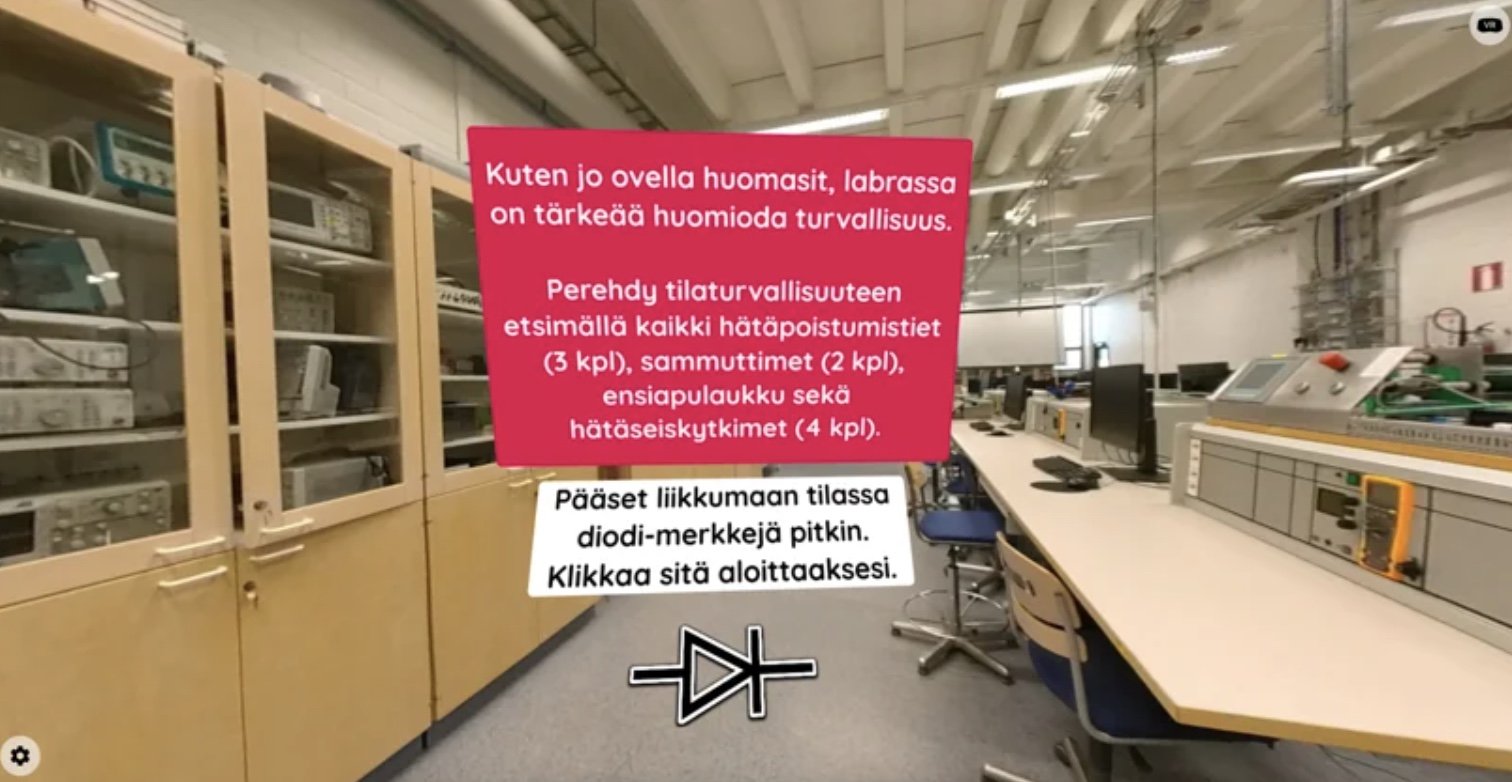
Through the virtual tour, students get a preview of the electrical engineering laboratories at different locations. The VR environments cover fire extinguisher locations, emergency exits, emergency stop buttons, and other safety equipment.
The virtual implementations were created in collaboration between Centria's lecturers and specialists and 3DBear. The virtual tour covers three different electrical engineering laboratories at different locations. The VR environments cover safety equipment including fire extinguisher locations, emergency exits, and emergency stop buttons. Students also learn about the locations, purposes, and general operating instructions for laboratory equipment and supplies. Centria also developed a laboratory demonstration learning environment in the form of an escape game. In the game, students must complete specific tasks in the laboratory in a guided manner. Students have welcomed the implementations enthusiastically and commented as follows during the Electrical Safety course:
"Wish we had this back in our day."
"It felt like being there in person."
"Nice to get to see right away what's coming."
"Not all the calculations worked in the escape game yet — need to review."
"It sparked interest in lab work in a completely different way than what was described during orientation day."
Learning environments that enable hybrid learning provide a clear competitive advantage for the institution. "The opportunity to complete studies flexibly according to one's own schedule and life situation is a clear competitive advantage. Centria has long had extensive hybrid learning programs and international students. Genuinely time- and location-independent flexible teaching suits Centria's needs very well," says Janne. Centria has also piloted a completely new teaching approach, HyFlex teaching, with positive results. "In a HyFlex course, students can choose their mode of participation between in-person, hybrid, and self-paced online learning," Janne explains.
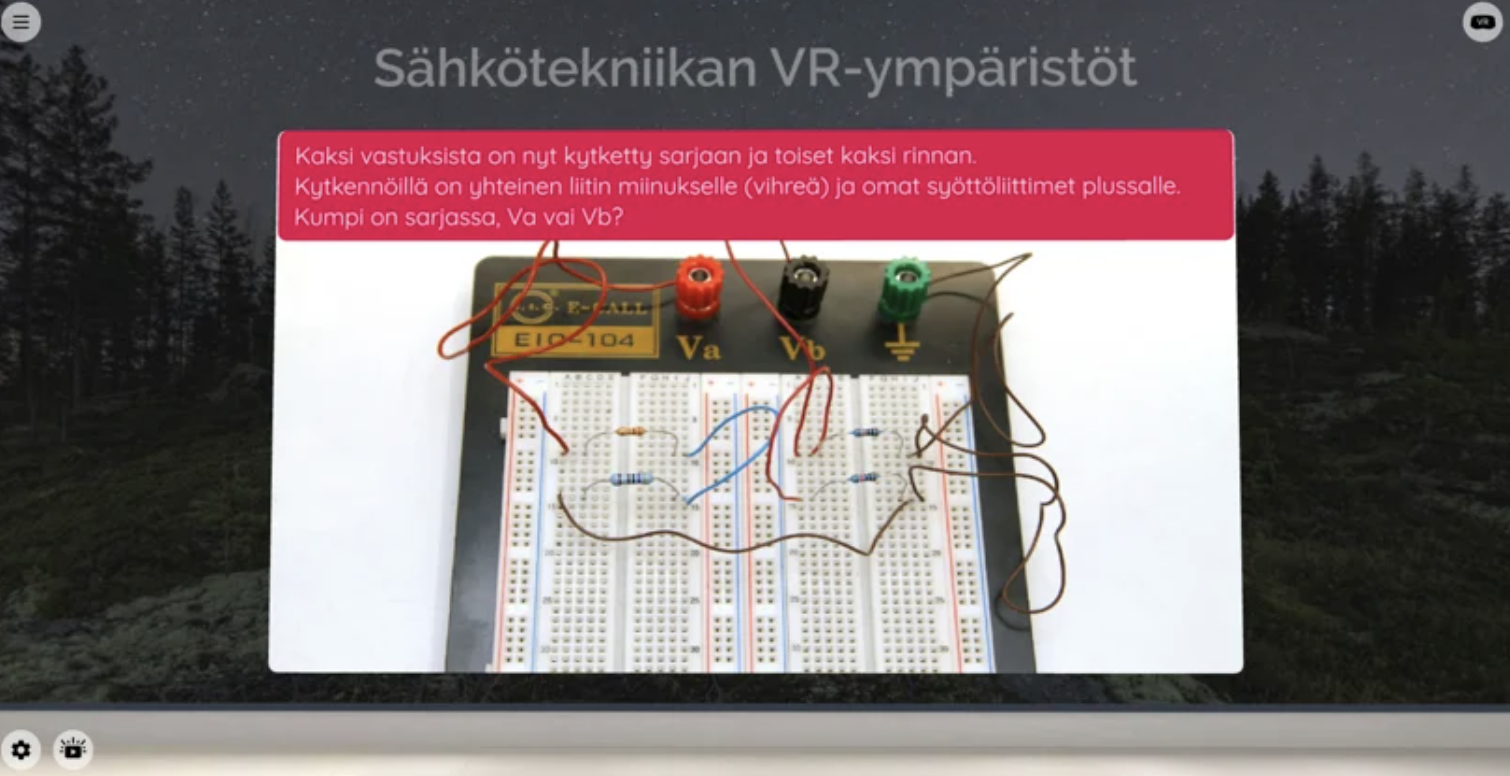
Through the game, students get to explore what's inside the instrument cabinets, how to select load devices, how to use power sources, and most importantly, how to build circuits safely.
Janne points out that virtual learning environments also support the piloted HyFlex model, as they bring physical spaces and activities within reach of those participating online. "For example, the ability to explore spaces and environments virtually supports the core idea of HyFlex, where all students should be offered the same learning outcomes regardless of their mode of participation," says Janne. Centria is committed to developing HyFlex teaching, and HyFlex-model courses will launch in 2024. Various distance and hybrid learning environment solutions will be an integral part of HyFlex teaching.
The project was carried out in collaboration between 3DBear and Centria. On Centria's side, the team took a strong lead in the technical work on the VR platform, led by Janne Heikkilä and Janne Torvikoski. Kari Saaranen, Lecturer in Electrical and Automation Engineering, ensured the excellent subject-matter content.
For more information about the project:
Janne Torvikoski, janne.torvikoski@centria.fi, Digital Pedagogy Specialist, Centria
Nenna Kaunisto, COO and project lead, 3DBear
Janne Heikkilä, Educational Technology Specialist, Centria
Kari Saaranen, Lecturer in Electrical and Automation Engineering, Centria
Interested in a similar project? Contact Nenna (nenna@3dbear.fi)!