

Keuda piloted the use of VR technology and AI as part of the competence assessment process in collaboration with 3DBear and Elias Robot. The goal of the collaboration was to introduce alternatives to the recognition process that genuinely support and empower students, rather than merely testing their language proficiency.
The large number, multinational backgrounds, and diversity of students enrolling at Keuda initiated the development of the competence assessment process. "We felt it was important to create alternative ways for applicants, students, and staff to assess their own or their clients' competencies in a sustainable and equitable manner," says Arja Koli, Vice Rector of Keuda. Keuda wants to ensure that every applicant finds a suitable path from Keuda's range of programs. The competence assessment phase is critical for creating a personal competence development plan that supports individual language skills and professional development.
"Keuda is a pioneer in many digital pedagogy solutions, so it was natural to start reforming the competence assessment process in the same direction."
Technology was immediately seen as an opportunity for developing the recognition process. "Keuda is a pioneer in many digital pedagogy solutions, so it was natural to start reforming the competence assessment process in the same direction," says Heikki Virtala, Keuda's Sector Manager. At Keuda, leveraging technology is seen as part of the organization's learning and quality assurance. For the recognition process, technology enables new alternatives that are also needed to support Keuda's diverse clientele: "We can use different environments and applications for different applicants, which both reliably produce the same outcome and offer the applicant a good experience — personalization is the core competence of vocational education," says Arja. Arja also points out that using digital and AI-powered tools is extremely cost-effective when deployed across as many processes as possible to support staff work.
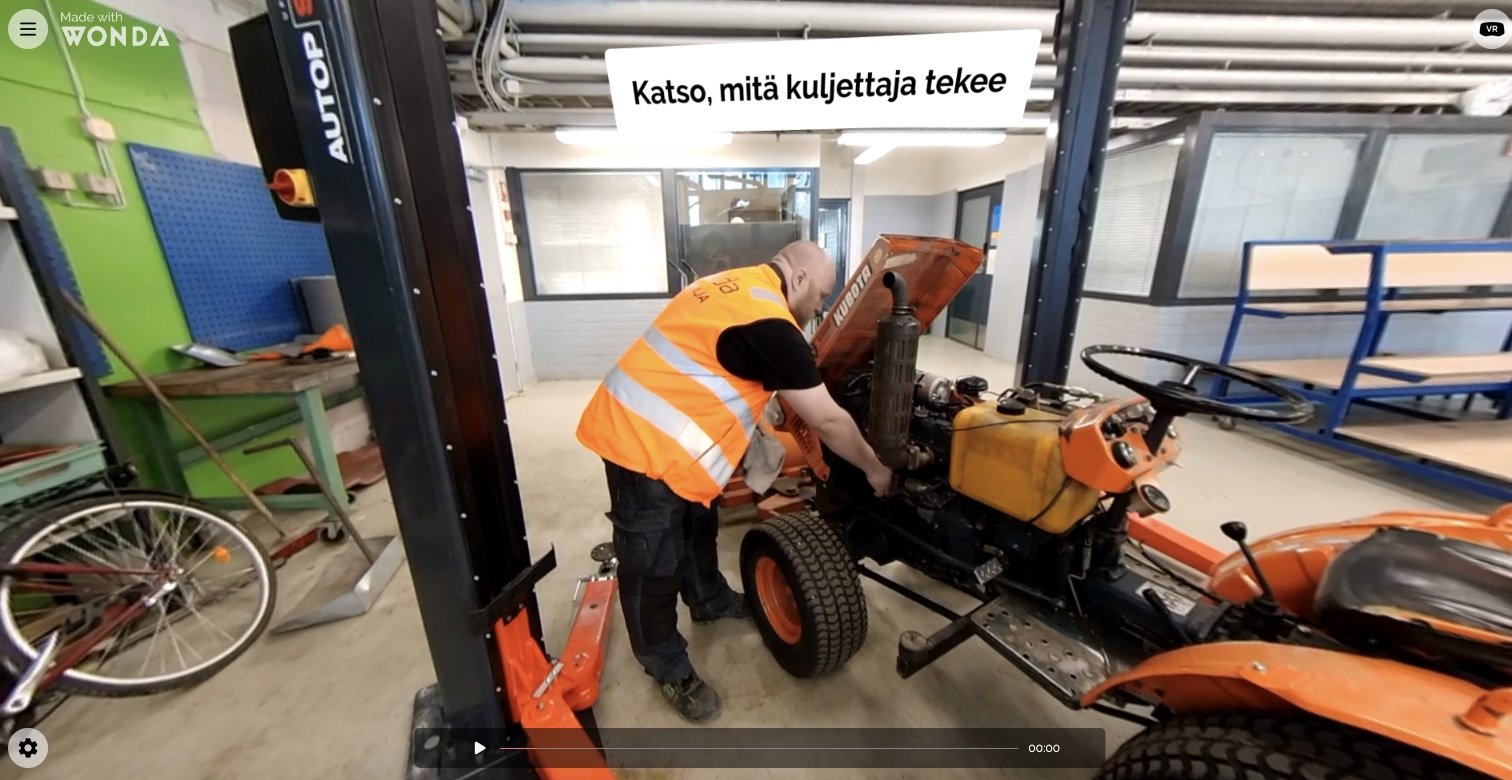
The pilot's VR implementations simulate practical situations and environments.
In the pilot, solutions based on VR technology and AI were developed. In collaboration with Elias Robot, a new AI-based assessment tool was created that helps make students' competencies visible. In the first phase, the tool has assessed linguistic and mathematical skills, and in the future it can be expanded to other professional skills as well. "The operating principle of Elias Robot's assessment tool is based on AI and large language models — the tool is adaptive and offers learners tailored, AI-generated exercises," explains Johanna Hemminki, CEO of Elias Robot. The assessment tool analyzes students' oral and written texts based on the Common European Framework of Reference skill level descriptors. The tool's analysis draws on an extensive collection of authentic spoken and written language samples. Elias Robot's solution makes language proficiency assessment objective and efficient. "Teachers don't need to go through large numbers of written assignments or arrange separate interviews for oral language assessment — additionally, teachers can focus better on improving teaching quality and providing individualized guidance," says Johanna.
Through the VR solutions piloted with 3DBear, applicants can demonstrate their language skills in simulated practical situations and environments, within the context of their chosen field of study. The developed environments are based on authentic 360° photographed work environments. The pilot was implemented for immigrant-targeted logistics training, where understanding safety instructions at work is central. VR environments enabled testing comprehension (and compliance) of instructions in practice, across different situations. General vocabulary was also tested in context. "During testing of the VR pilot implementation, it was wonderful to see what a difference bringing context to language proficiency testing makes and how it enables competence to be demonstrated in entirely different ways than traditional methods," says Sara Saloniemi, who led the project on 3DBear's side.
The collaboration between Elias Robot and 3DBear in the pilot was also seen by both companies as evidence of fruitful partnership opportunities. "By combining different solutions, we can offer a deeper and more diverse competence assessment experience," says Johanna. Both solutions in the pilot were developed in collaboration with Keuda's teachers.
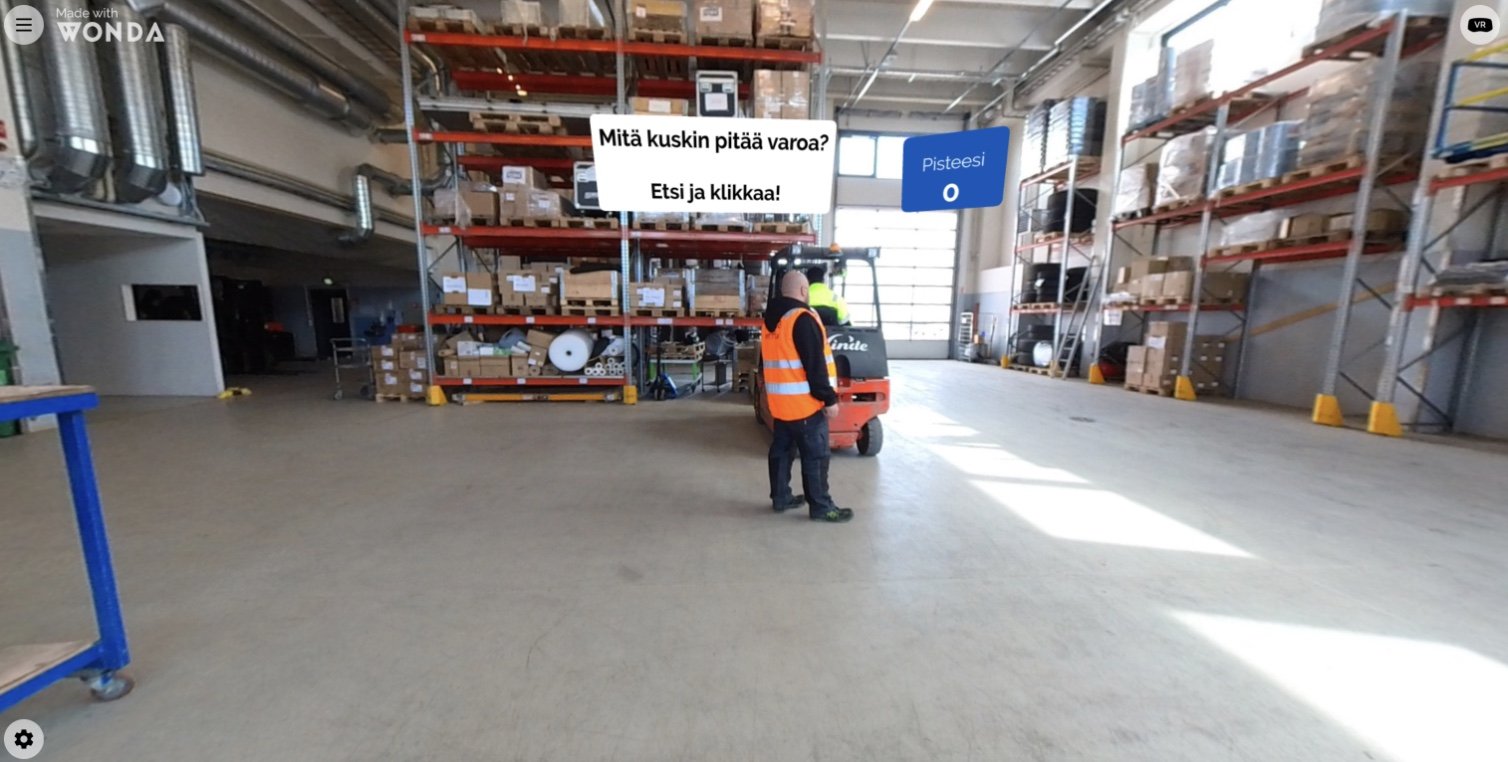
The applicant goes through various safety-related situations and applies their Finnish language skills.
The piloted solutions are in use at Keuda, and more user experience is being gathered continuously. VR environments are already widely used for competence acquisition and even competence assessment. The Elias Robot language application has brought an easy-to-use, up-to-date tool for providing assessment feedback during the application phase, as well as for tracking student progress and self-assessment.
At Keuda, development of the competence assessment process continues on a long-term basis. "Competence assessment is about finding strengths — we have significant work ahead of us in developing career guidance for both compulsory education students and continuous learning applicants," says Arja. Arja also sees that the TE2024 and KOTO reforms of 2024 will bring entirely new perspectives in the years to come. Keuda's reputation as a high-quality and well-known education provider is founded precisely on continuous development work. "Agile development and continuous innovation are the everyday reality of vocational education, reflecting the rapid evolution of working life — this builds credibility and trust in vocational education," says Arja. At Keuda, they believe that continuous development and bold experimentation are essential for the organization's learning and growth.
For more information about the pilot:
Arja Koli, Vice Rector, Keuda, arja.koli@keuda.fi
Johanna Hemminki, CEO, Elias Robot, johanna@eliasrobot.com
Sara Saloniemi, 3DBear Project Lead, sara@3dbear.fi