
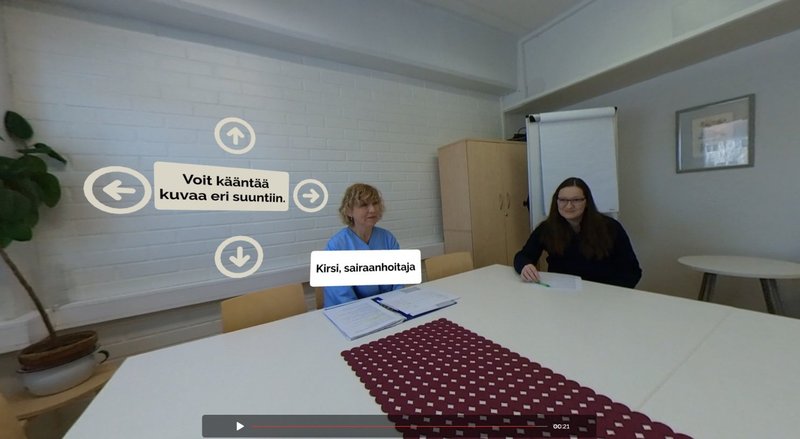
The development of virtual learning environments at Ammattiopisto Livia (Livia Vocational College) began from practical teaching needs in the fall of 2021. The home care qualification module could only be completed once per academic year, which hindered students' flexible study paths. Through virtual implementations for the home care module, the goal was to make course completion more flexible. Many students are already working, and the VR environment serves excellently for reviewing and practicing — also remotely. Livia's management strongly supported this development and made the project possible.
The first virtual learning environment developed for the home care module covers home care tasks such as work planning, monitoring the client's condition, identifying risk factors in the client's home, supporting the client's ergonomics and mobility, and medication distribution. Students get to act as caregiver for a client named Asko in a very hands-on manner, going through the entire home care visit from the home care office to Asko's home.
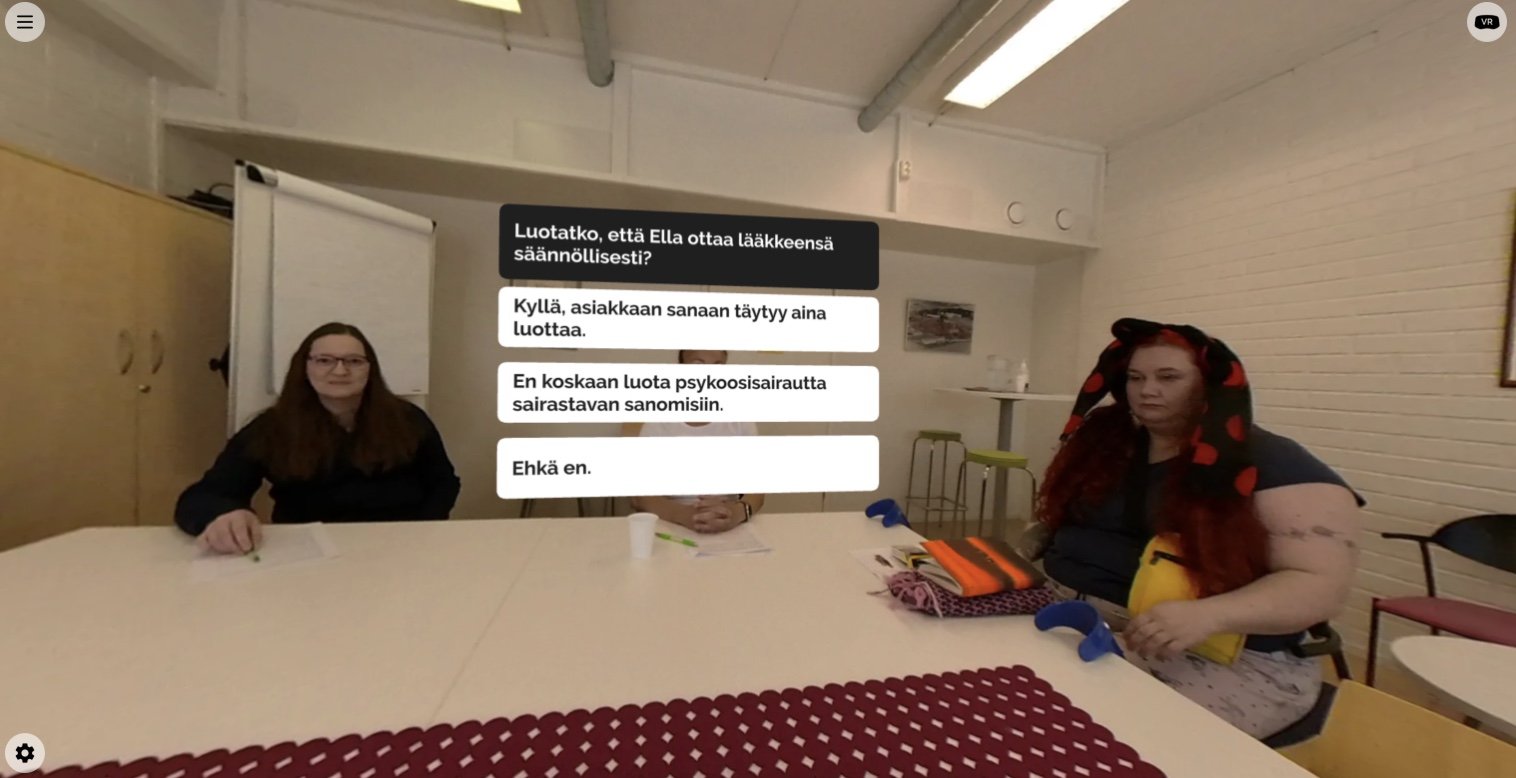
In the care meeting VR exercise, students evaluate the reliability of the client's statements based on the client's behavior, condition, and symptoms.
Care Meeting VR Exercise
The second VR content developed at Livia was a care meeting for a client named Ella, who suffers from schizophrenia and is being planned for discharge from the hospital. Students can participate in the care meeting virtually, learning about care meeting practices and participants' roles, assessment of the client's physical and mental functional capacity, the client's financial coping prerequisites and support options. Students also learn about properly and professionally encountering a client with a mental health disorder. The VR content provides an authentic experience of meeting a schizophrenia patient, thanks to the impressive acting performances by Livia's skilled teachers. Students embraced the content enthusiastically, highlighting comments such as:
"Ella's care meeting progressed in the right order — topics weren't jumping around. This kind of learning environment would be an excellent review at the end of every course."
"It [the VR exercise] is especially good because I learned to help a schizophrenia patient and learned a lot about how to recognize a person suffering from schizophrenia."
"[I learned] how a schizophrenia patient may behave. I had never met a person suffering from mental health issues before."
Livia's students also shared excellent ideas for future VR content, hoping for a follow-up to the care meeting content with a visit to Ella's home after discharge. Students also said they would like to practice in a similar environment, including discharging a dementia patient, other illnesses, hospital care, and palliative care.
Co-Development Process with Teachers
Behind the project was a co-development process carried out with Livia's staff and teachers. Every person involved in the project was actively engaged in developing the VR content, from filming to technical implementation. Livia's project team consisted of nine teachers who formed the VR core team. This working group developed the two VR learning environments together with 3DBear's specialists. The team included teachers of nursing, nutrition, physical education, and substance abuse and mental health work, as well as team leaders. Together, these teachers had very broad pedagogical expertise and enthusiasm for the VR project!
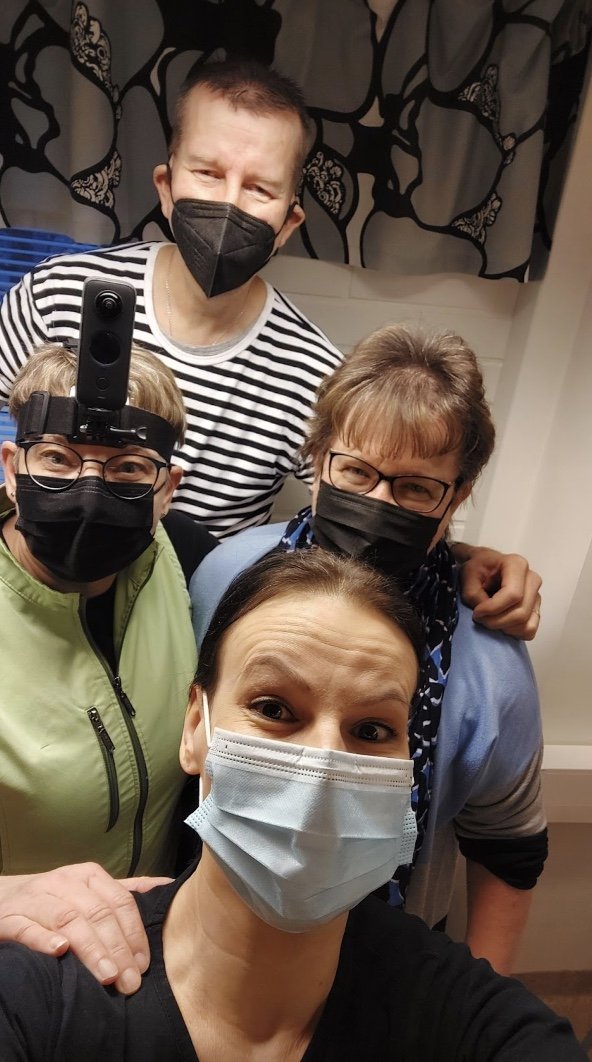
Ammattiopisto Livia's enthusiastic VR core team during home care VR content filming.
At the start of the project, none of the teachers knew exactly what VR was or what they were getting into. During the project, the teachers learned about the technology, virtual learning environment development, and VR platform usage under 3DBear's guidance. The VR core team participated in all project phases from scripting to filming, editing, and student testing. The teachers' role in the project was of paramount importance — innovating content and serving as subject matter and pedagogy experts. The VR core team described the project in their own words:
"New and interesting. When I started, I didn't even know what VR was. When you do and learn, interest grows. I've learned about scripting, filming, editing, Wonda VR [platform] usage and possibilities. The multidisciplinary collaboration has been eye-opening. The collaboration with the home care unit was wonderful. Working with 3DBear has gone smoothly — sometimes even the smallest details were refined together. The core team collaboration has been smooth and always enjoyable."
"Really interesting! I've learned a lot of new things and it's been nice to collaborate with other teachers."
"An excellent experience."
"An interesting and positive learning experience. The project resulted in two learning packages that differ from traditional lecture/assignment pedagogy and are, in their uniqueness, inspiring for students."
Lessons for First-Time Developers
Ammattiopisto Livia's VR core team offers the following lessons for first-time virtual learning environment developers:
- Remember that virtual learning environments don't replace teachers or traditional teaching — nor is that the intention. Virtual learning environments add value to teaching!
- You don't need to be a digital technology or gaming expert. You learn constantly during the project, and working together is inspiring!
- Well planned is half done. It's important to understand the pedagogical goal and keep it clearly in mind throughout the project.
- Development work takes time — many details need to be considered. Time resources must be allocated!
- Scope creep is a common risk. Stay focused on the original plan. Many additional ideas come up during the project, and scope can easily creep.
- Just start — that's where it begins. No fear!
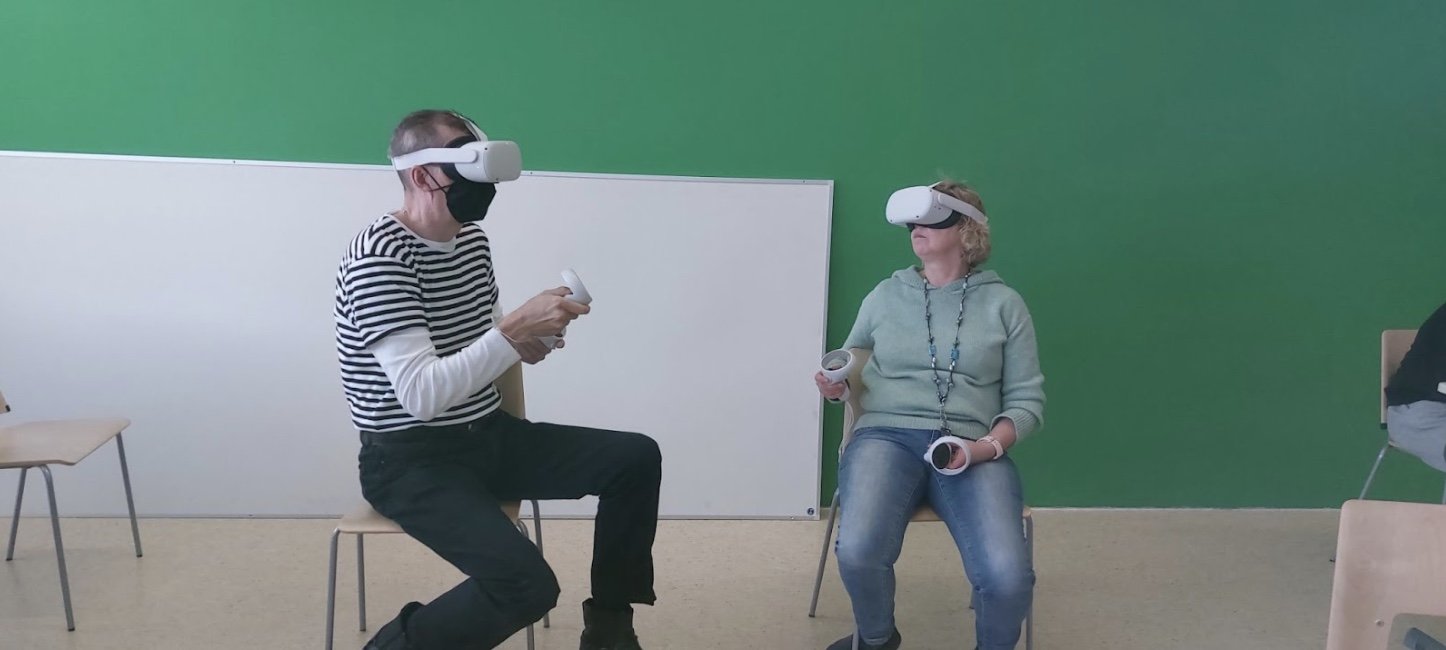
Teachers testing VR headsets. The developed VR exercises can be used with VR headsets as well as on a computer or phone.
Future Plans
Livia aims to embed virtual learning environment development more widely across the institution. New virtual learning environments are already being developed on the health care side. Livia is further developing VR content created and shared by other institutions, with 3DBear's support. 3DBear enables institutions to share VR content reciprocally, so that the same content doesn't need to be produced in every organization. Going forward, Livia aims to expand VR development to other fields of study as well.
Authors:
Anu Kurki, VR Project Lead, Ammattiopisto Livia, Lecturer in Health Care, anu.kurki@livia.fi
Sara Saloniemi, 3DBear Project Lead