
Teachers at Suomen Diakoniaopisto decided
what their new learning material would look like
In August, Suomen Diakoniaopisto introduced new online learning material for the competence area of mental health, substance abuse and addiction work. 3DBear produced the content, and SDO's teachers defined what the material covers and at what level each topic is taught. Because the teachers took part in producing the content, they were able to shape what the new material became.
Three ways to get new material
The qualification requirements for the vocational qualification in social and health care were renewed on 1 August 2026, so the competence area needed new learning material in any case. SDO had three options: teachers producing it themselves, buying a ready-made package, or co-development with a partner. Producing it in house was considered for a long time.
Our teachers produce a great deal of good, high-quality online material. Of course, that also means allocating a considerable amount of resources to it.
Simuna learning environments were already in use in the basic studies and in the competence area of care and rehabilitation for older adults, and the new competence area had to fit into the same whole.
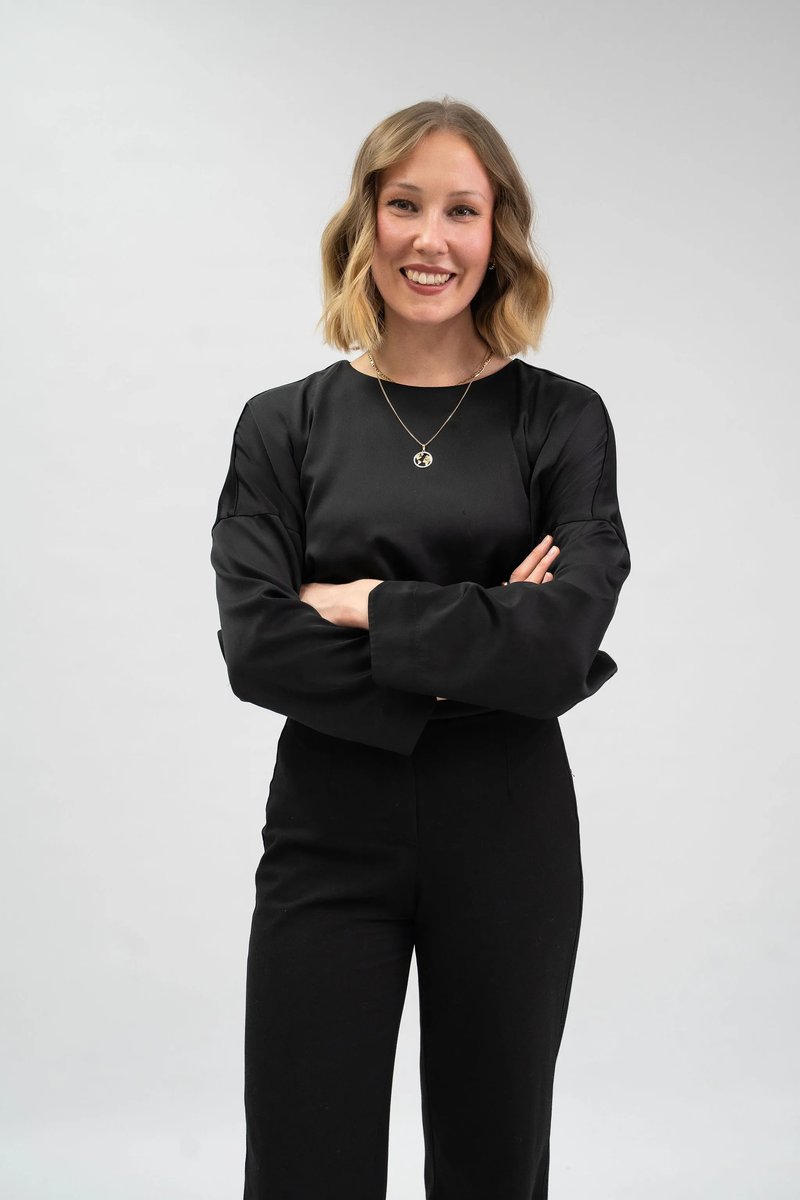
"Building consistent pedagogy across our online campus was one decisive reason why we chose co-development. SDO's teachers brought strong subject expertise in mental health and substance abuse work, and 3DBear brought the online pedagogical and technical expertise", says Education Manager Heli Simonen, whose responsibilities include the online campus and apprenticeship services.
Co-development in practice
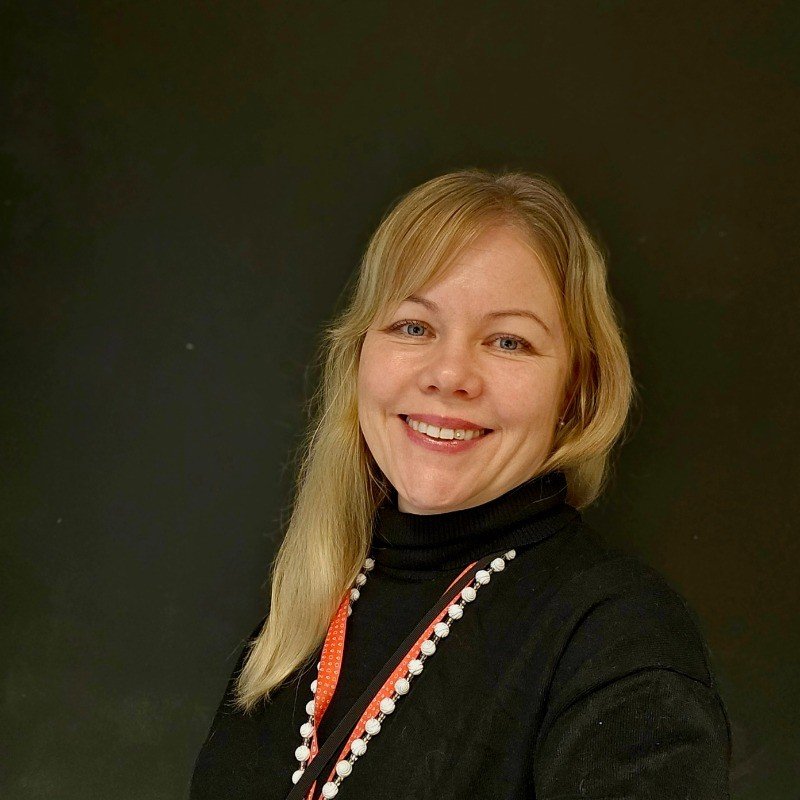
In practice, co-development means that 3DBear is responsible for producing the learning material. The theory base was written with AI assistance, and simulations, avatar conversations and exercises were built around it. The whole came together as six modules in Simuna. The writing was done by Laura Laakkonen, a pedagogical specialist who works at Suomen Diakoniaopisto and carried out this production for 3DBear.
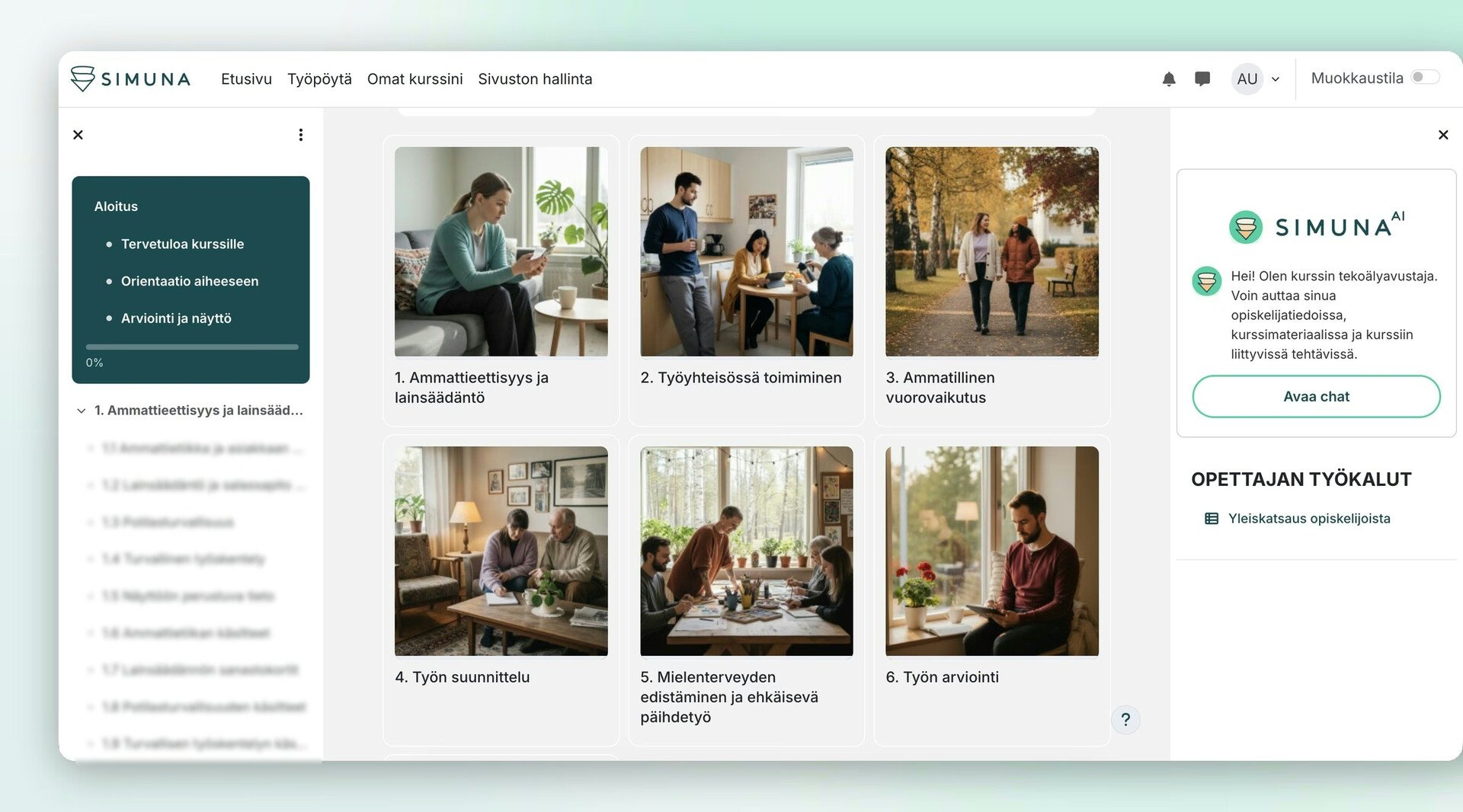
AI gets the most laborious and time-consuming part out of the way at the start, which leaves far more time to develop the theory.
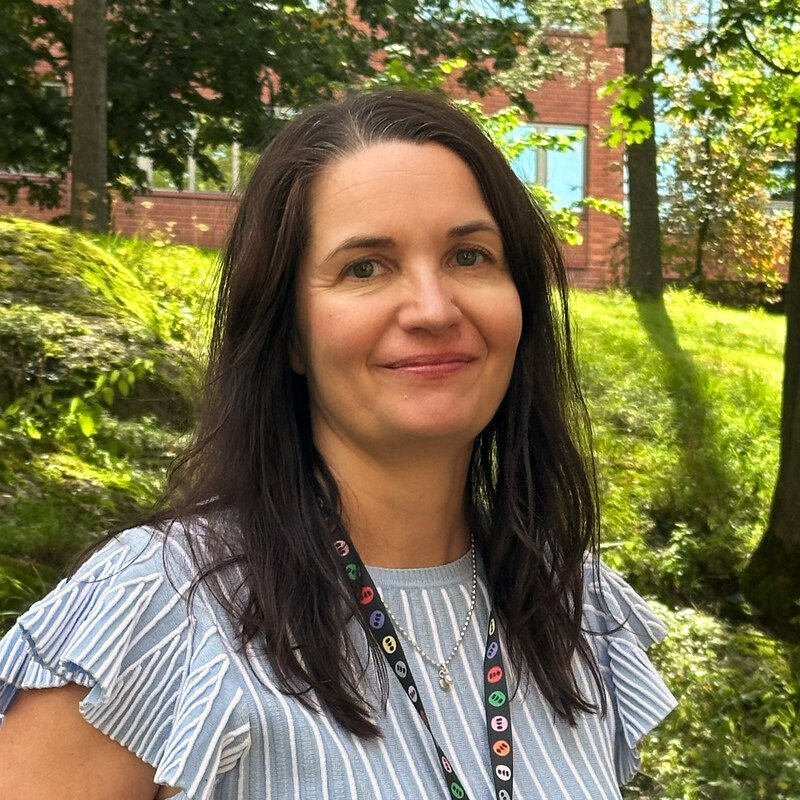
SDO's subject specialists Irina Köntti and Maria Viljamaa went through the material and adjusted it to match the work of a practical nurse. They knew both the qualification requirements and what a practical nurse does independently, what they do alongside another professional, and where the responsibility passes to someone else. The level at which each topic is taught, at each stage of the studies, makes an enormous difference.
The workload on the college stayed where it had been agreed. "The schedule has held up really well, and the time I have spent on co-development has stayed within what was planned," Heli says.
What students practise
In the simulations, students encounter an aggressive client, an acute psychosis and a situation where self-harm has to be raised in conversation. These situations are difficult to practise in advance, even though they will come up sooner or later at work. In the avatar conversations, students practise the encounter safely, as many times as they want.
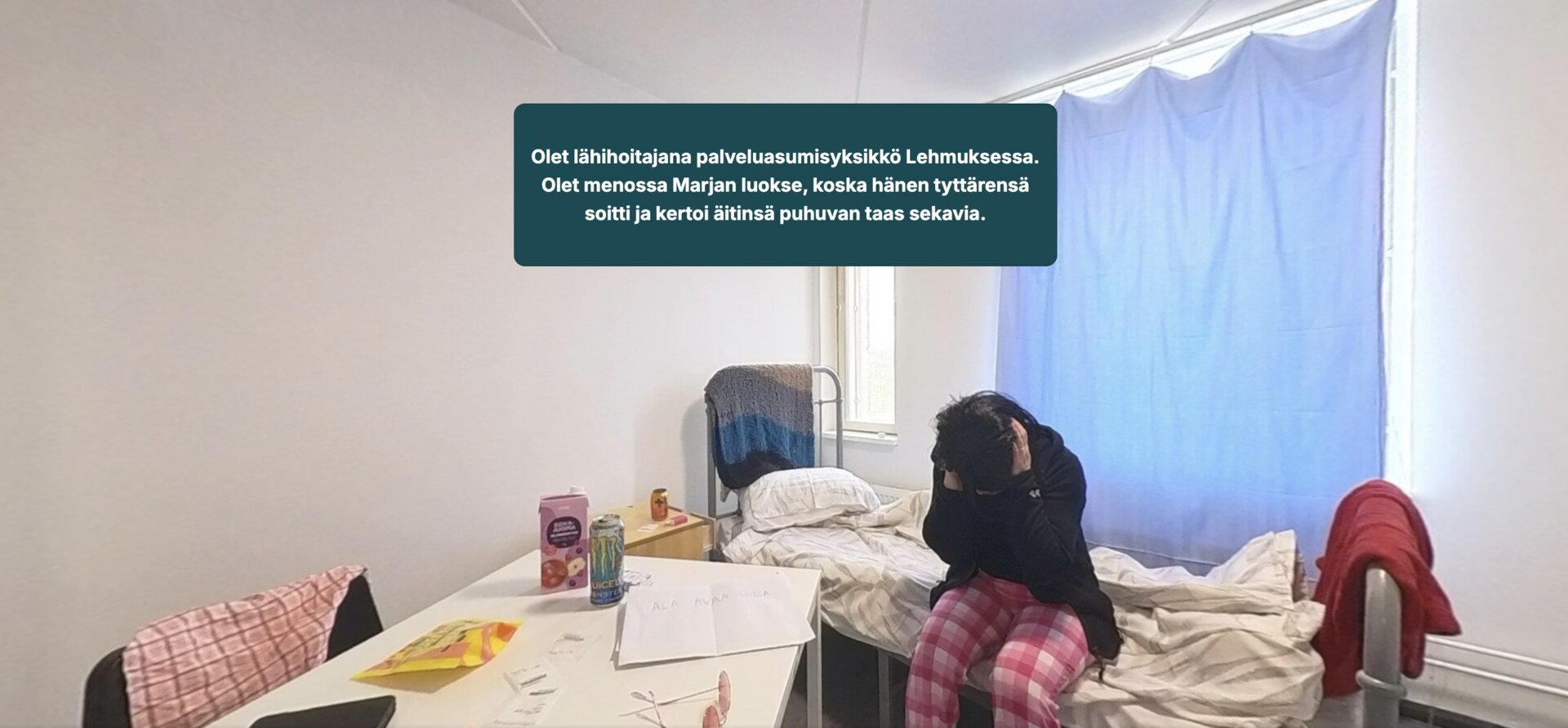
An acute psychotic situation. The student gets the background before stepping into the resident's room.
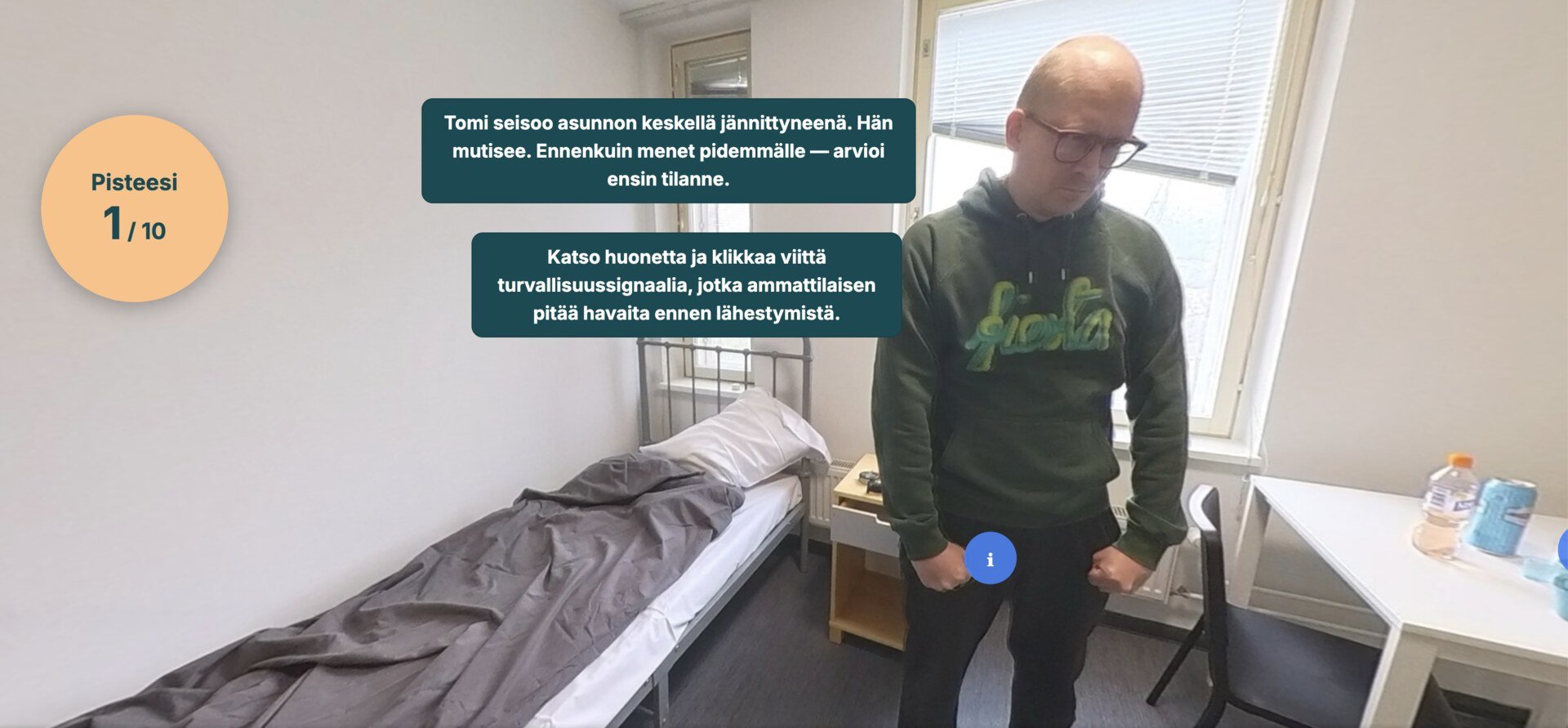
Meeting an aggressive client. Before approaching, the student looks for five safety signals in the room.
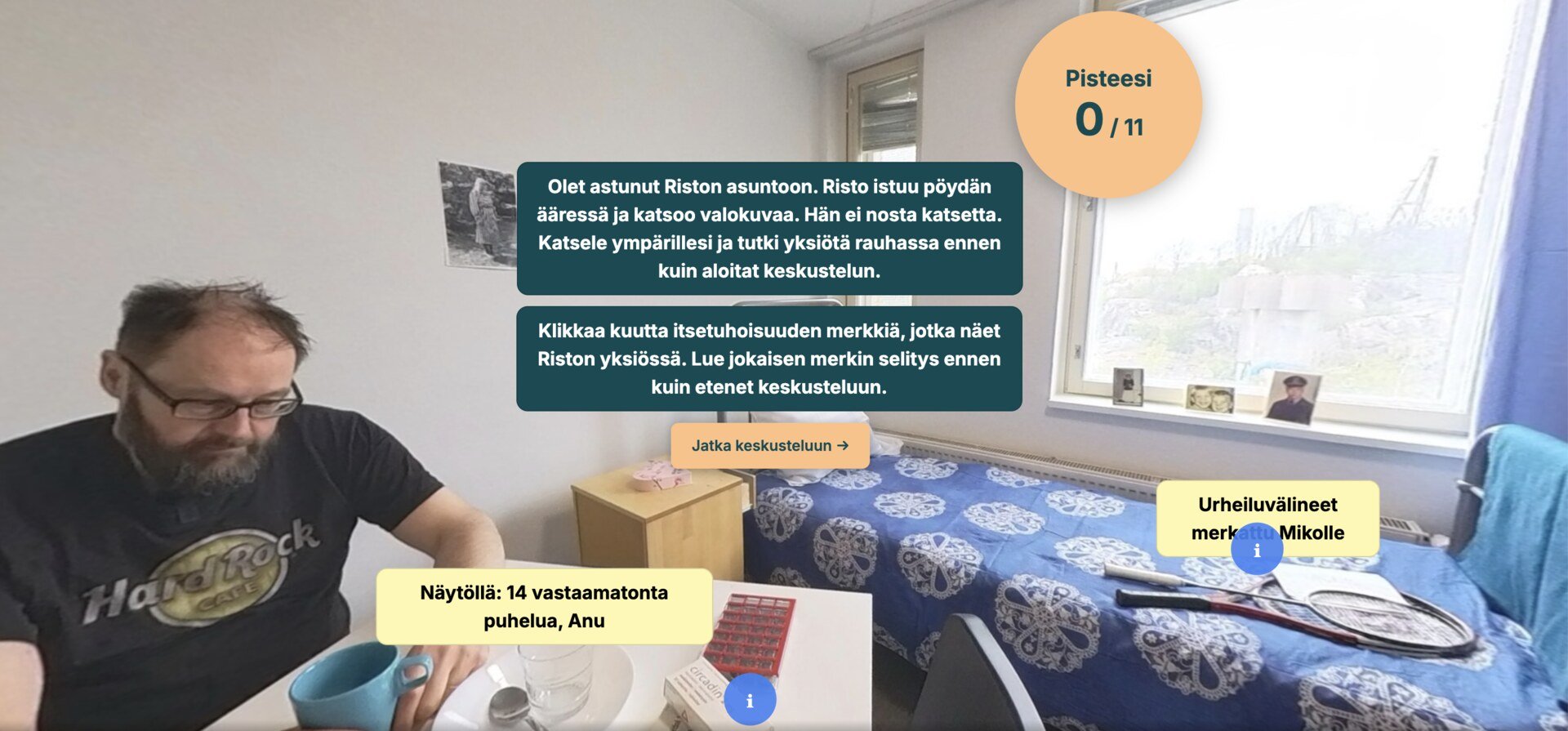
Raising the subject of self-harm. Six signs are found in the flat, and each one is explained before the conversation.
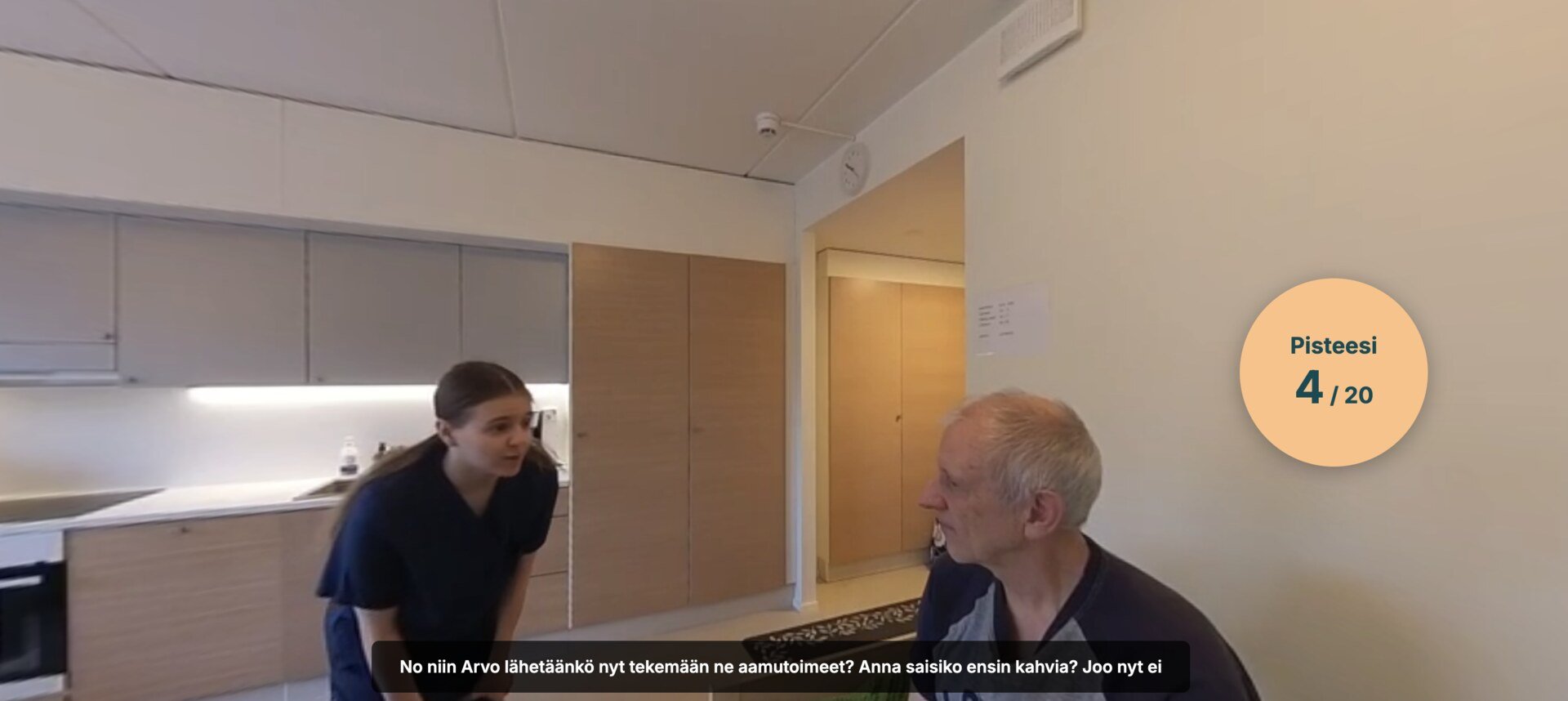
Supporting participation. The student decides how the morning routine starts on the resident's own terms.
When a student sees a work situation that is as authentic as possible, they have to think about how to apply what they have learned. It is also a safe environment for practising these situations for the first time.
Feedback from students
The first group started on the new material in August, and comments came in straight away. At SDO, Simuna is known as Nalle. "What's good about Nalle is that you can easily read and revise the key things we've covered," one student notes.
Students say that topics progress sensibly and that every subject comes with a revision exercise. One of them summed up the level like this: "There are easy and simple things, but demanding ones too." That is exactly what Irina and Maria were after when they went through the content from the perspective of a practical nurse's work.
One comment was also a development suggestion. Students found the group exercises good, but many had done them alone and wanted instructions for working through them independently as well.
What co-development left
with Suomen Diakoniaopisto
Alongside the finished material, SDO gained expertise.
Co-development has increased our understanding and skills in using AI. The project has also given us perspective on just how much AI can already do, and the enthusiasm to learn more about using it.
The second thing is influence over the content. That is what Heli emphasises when asked what she would say to another education manager. "With co-development, you have a great deal of influence on the content that goes into a qualification module. Being able to influence the level the material is set at has also been important."
The material also keeps developing. The first user feedback from teachers and students guides the next round, and the second qualification module in the competence area will be ready in spring 2027, produced the same way.
Laura recommends the model to colleagues at other colleges: "It's absolutely worth getting involved."
Co-development is how we produce new Simuna learning materials. If your material is due for renewal, let's look together at what that would mean in your case.