Tampere Adult Education Centre (TAKK) has a strategic focus on developing distance and online teaching as well as staff digital competence. TAKK's value is to be a bold pioneer, and the organization encourages experimentation. This led to the development of VR learning environments for social and health care, automotive, and electrical trades in the fall of 2022.
The collaboration project with 3DBear started from the needs of TAKK's educational fields, which had been mapped out before the co-development project began. Tuuli Oksanen, TAKK's Development Coordinator who was closely involved in the project, emphasizes the importance of understanding VR environments as part of the broader teaching context: "These environments absolutely do not replace traditional teaching — they support it." Tuuli highlights that the environments enable, for example, exploring and familiarizing oneself with a topic in advance, independently reviewing material when absent from class, and especially repeated practice, which benefits the learning of work procedures.
"You still sometimes hear concerns that virtual environments might replace hands-on work in trades. It's important to emphasize that these environments add value — they don't replace," Tuuli continues.
Virtual Implementations Enable Exploration of Different Work Environments
In the VR learning environment created for social and health care, practical nursing students can practice client-centered planning in disability care. The student's task is to independently visit a virtual supported living unit, gather information about a resident, and then create a service plan based on the collected information together with other students in a virtual meeting room. The learning environment makes it possible for all students to visit a supported living unit, which was not previously possible for everyone.
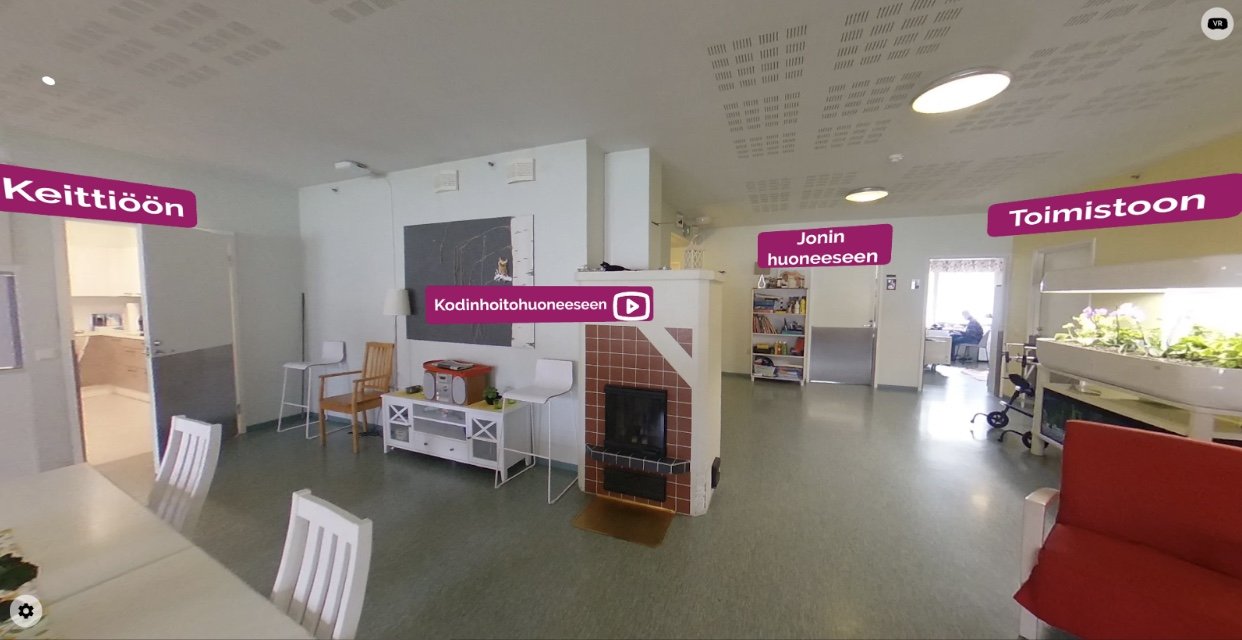
Students get to independently explore a supported living unit.
Practicing Systematic Troubleshooting in a Virtual Environment
The automotive trade implementation addressed a need identified from working life to improve students' systematic troubleshooting skills. The student's task is to determine the cause of a car's auxiliary heater malfunction. Through repeated practice, students learn to apply a systematic troubleshooting model in practical work as well.
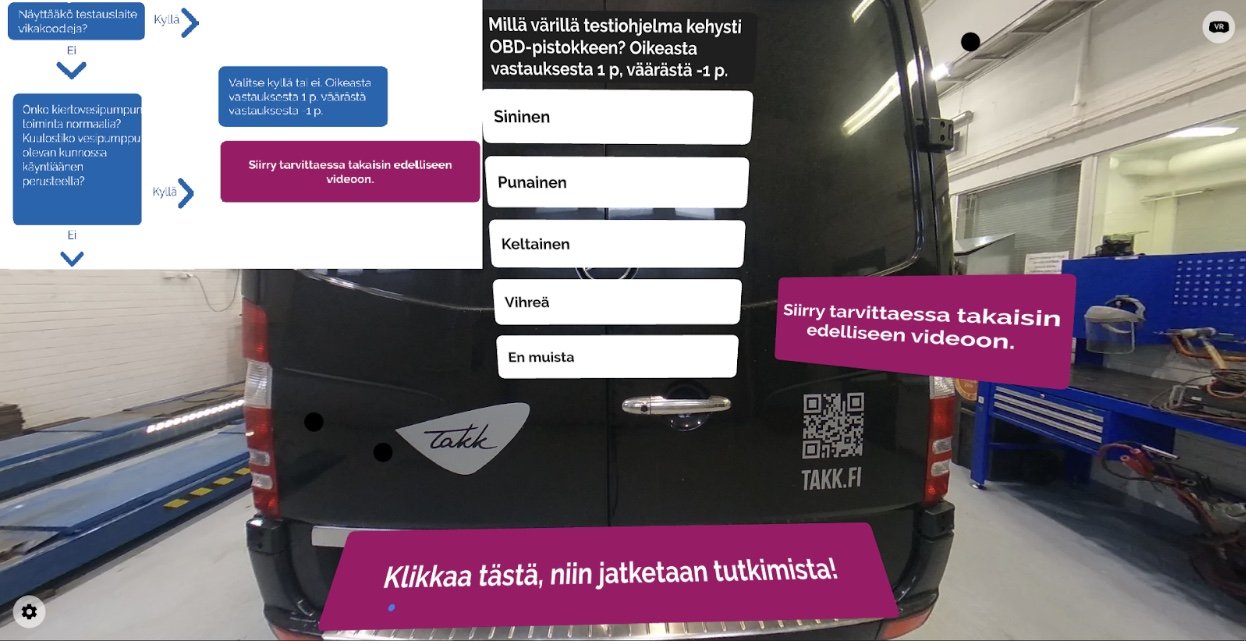
Students use a flowchart to determine step by step what is causing the auxiliary heater malfunction.
Active Learning as Part of Statutory Safety Orientation
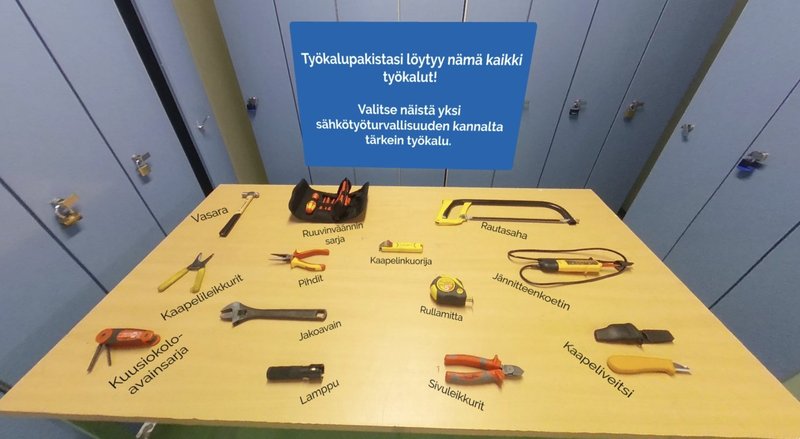
In the electrical trade, the statutory safety orientation for the electrical workshop was implemented virtually. The virtual safety orientation engages students in thinking about safety-related factors much more actively than a traditional safety walk. In the VR environment, questions must be answered correctly to proceed. This ensures that students have been sufficiently attentive and genuinely learn to act correctly in different types of situations. In addition to the traditional safety walk, there is now the option of a virtual safety orientation that each student can complete at their own pace at a convenient time.
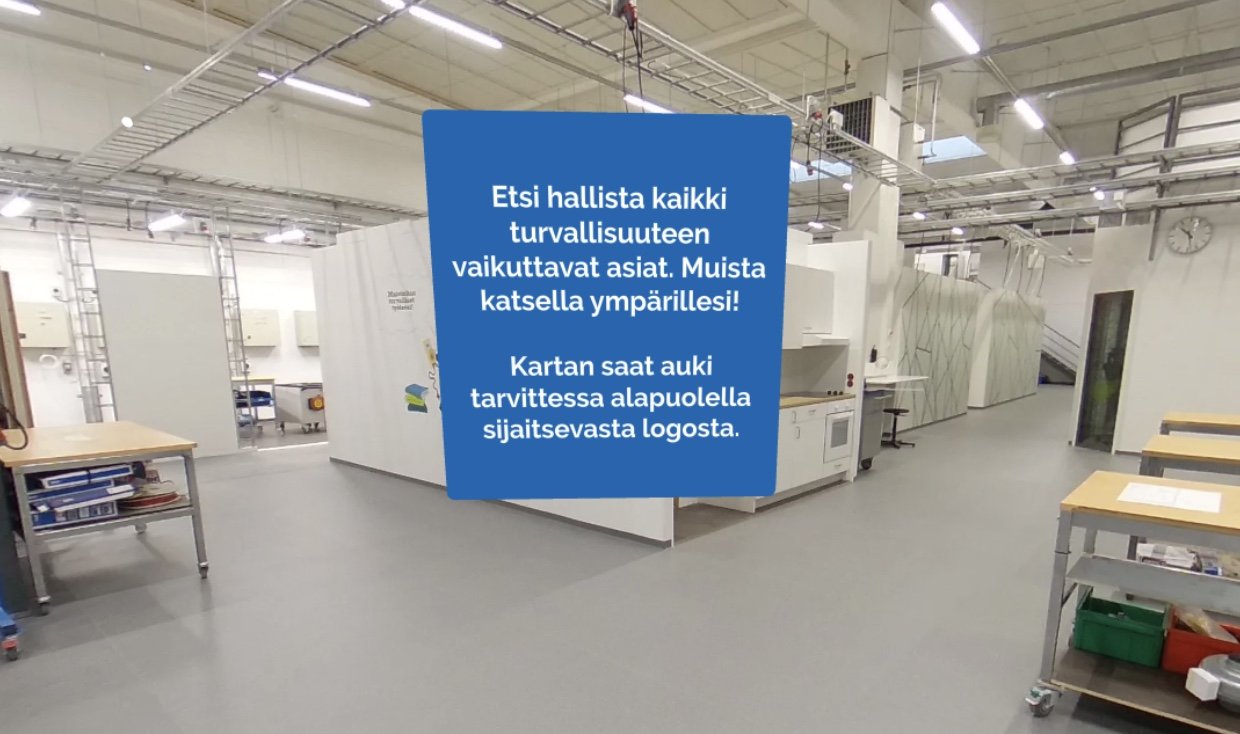
Students must identify all safety-related factors in the workshop to successfully complete the safety orientation.
The Co-Development Project Transfers Skills to Educators
As in every 3DBear project, TAKK's educators were closely involved in content development. Educators were genuinely given resources for VR development. Tuuli considers this important: "Time must be allocated for development work in blocks — not an hour here, an hour there. It can't be something added on top of weekly teaching hours." Noora Nyberg, who led the project on 3DBear's side, notes that this was reflected in the educators' enthusiasm: "From the very start, the educators had the idea of continuing content development independently, which shows true ownership of the project."
"Now the educators are building a virtual wellness center for social and health care. Students get to practice specialization skills comprehensively — without VR environments, this would not be possible."
The educators considered the greatest benefit of the collaboration with 3DBear to be learning what the virtual learning environment design process involves and what aspects to focus on. "When something is new to you, like this kind of design process, it's more efficient to start with a partner who knows the process and guides it. We certainly could have started on our own, but it would have required much more time and resources. We've learned enormously about design and the creative process during the projects, and sort of skipped the mistakes," Tuuli comments. Through the completed project, the educators' confidence in creating virtual learning environments increased significantly. With the gained expertise, educators can now continue developing VR environments independently.
For more information about the project:
Tuuli Oksanen
Development Coordinator, TAKK
Noora Nyberg
3DBear Project Lead