
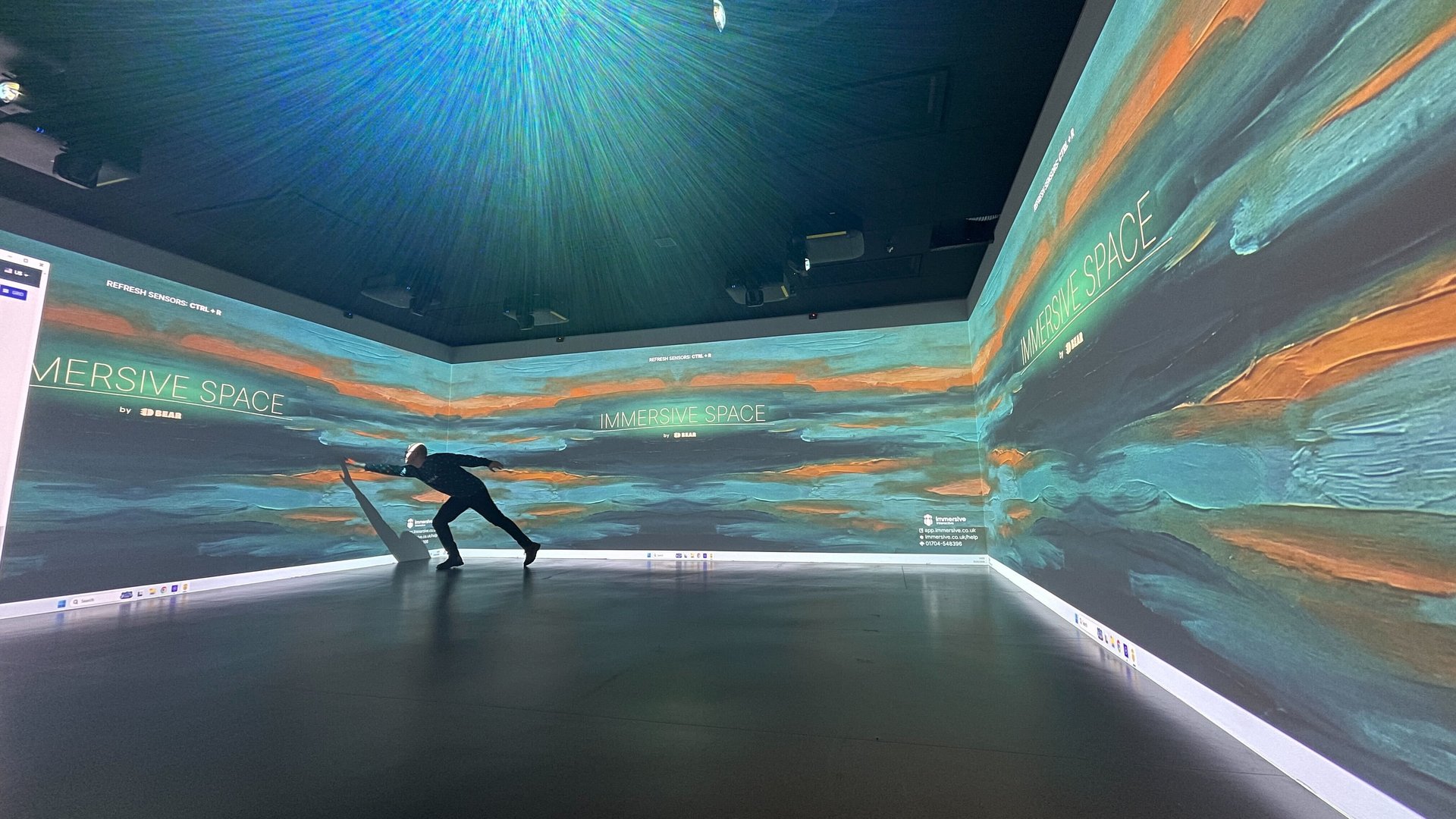
Oulu University of Applied Sciences wanted to take social and healthcare education to a new level. The goal was a space where the whole body and all senses are involved. The result is a multisensory immersive learning environment that serves both teaching and the regional economy.
The starting point: a need for a multisensory learning environment
Oulu University of Applied Sciences (OAMK) has extensive experience in applying digital solutions in teaching. Traditional simulation environments and individual technologies such as VR headsets serve a specific purpose, but they have their limitations: headsets isolate the user from the rest of the group, interaction with others is difficult, and a multisensory experience — where, for example, scents, sounds, and visual elements combine — is not possible.
OAMK had an ambitious vision.
"From the outset, we set out to build something that enables a multisensory and interactive experience," says Outi Kajula, Principal Lecturer at OAMK.
In social and healthcare, the need was especially concrete. When nursing, midwifery, or paramedic students practise decision-making in an emergency, theory or a standard simulation alone is not enough. They need an environment that feels real and where the stress, sensory stimuli, and pressure of the situation match actual work.

Outi Kajula, Principal Lecturer, Oulu University of Applied Sciences
2.5 years from idea to finished space
OAMK's immersive space was not the result of a quick decision. The process began more than two and a half years before the space was completed. Development Manager Mika Paldanius explains that, in the early stages, discussions were held with numerous experts — both within the organisation and outside it. The team explored spaces and technologies at international conferences in London and Barcelona, among other places.

Mika Paldanius, Development Manager, Oulu University of Applied Sciences
The direction was clear early on through project preparation, but comparing technological solutions and defining requirements took time. The project was broken down into clear parts: physical construction, ICT infrastructure, and software and system delivery.
One significant technical decision emerged during the design phase: the use of two projectors per wall, which enabled a considerably wider and more uniform projection surface. This opened up an entirely new scale for the space.
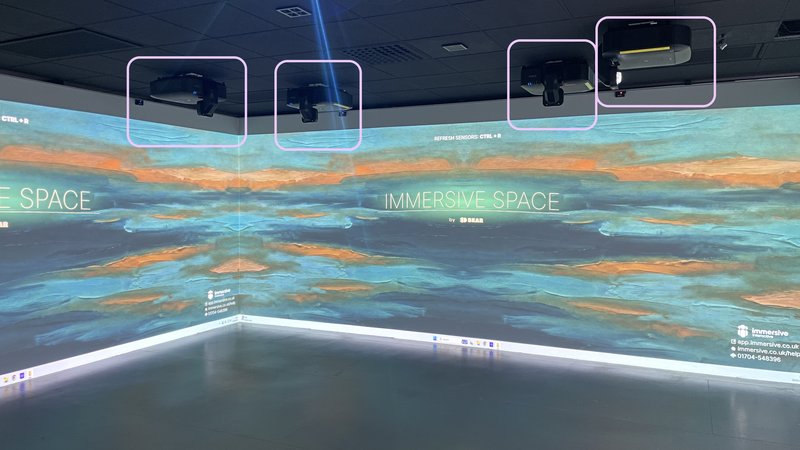
An immersive space showing how two projectors per wall are installed.
Tip for anyone planning an immersive space
OAMK emphasises that different groups of experts — builders, ICT, teachers, and procurement — should be involved as early as possible. Shared planning from the start saves time and produces a better result. International benchmarking also helped the team see what is possible.
What does an immersive learning space look and feel like?
Multisensory experience is the key word for the space: in addition to visual elements, soundscapes and even scents can be brought in, making training situations exceptionally realistic. The teacher controls the situation through the software and can change the scenario in real time. The space can also be used remotely, which significantly extends its range of use.
How were teachers brought on board?
One of the most common concerns when adopting new technology is rollout: how do you get teachers and staff excited and committed to using it? At OAMK, this was addressed deliberately even before the project began.
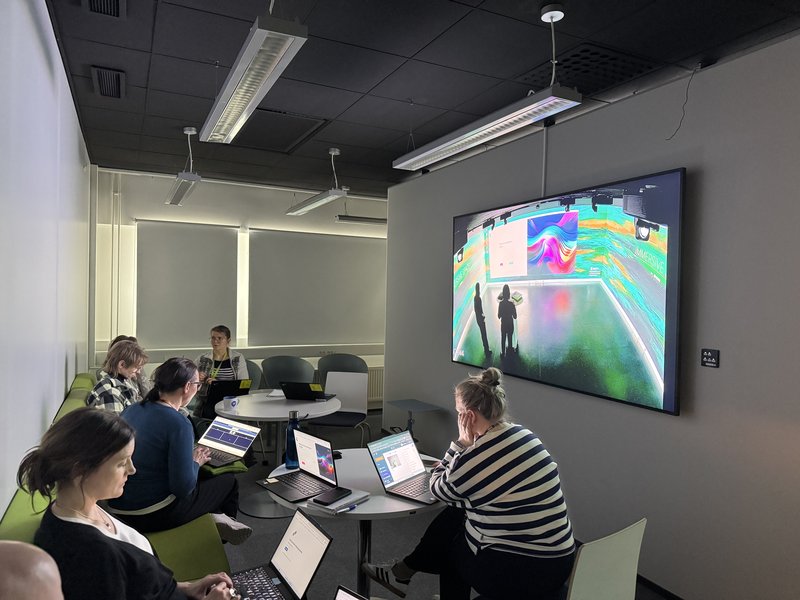
"Before we started drafting the funding application, we surveyed teachers' wishes and needs for a future learning environment," Kajula says. Teachers have been involved throughout the process — they have been able to influence the scenarios, participated in workshops, and received training in how to use the space.
The results speak for themselves: teachers have been highly interested and eager to try things out. Through the MetaHealth project, key staff from different degree programmes have already been trained, and the creation of shared scenarios has shown "outstanding enthusiasm and creativity," as Paldanius puts it.
Applications: from social and healthcare to industry collaboration
At OAMK, the immersive space is used broadly and across disciplines in social and healthcare degree programmes, with a range of methods and assessment analytics. Applications include, among others:
- Occupational and patient safety — identifying risks and developing solutions that advance safety
- Clinical competence — multi-professional collaboration, role dynamics, and processes
- Interaction — leadership and decision-making
- Regional preparedness exercises — simulating authority cooperation and emergency situations
The space does not only serve teaching. OAMK's aim is also to open the environment to regional companies and healthcare organisations, which can develop and test their digital solutions and services in an authentic-feeling environment. In addition, multidisciplinary collaboration takes place within OAMK, for example in joint projects between healthcare and media in the STARTS LABS environment.
"It was more than you could have expected"
When Outi Kajula stepped into the finished immersive space for the first time, after more than two years of planning, the reaction surprised even her. Everything the software and technology could offer came together in a single moment.
"It was even more than you could have expected," Kajula recalls. "We have ideas for the future, and it has been a pleasure to see how 3DBear and Immersive Interactive receive them and start developing the software in a future-oriented way."
Looking ahead
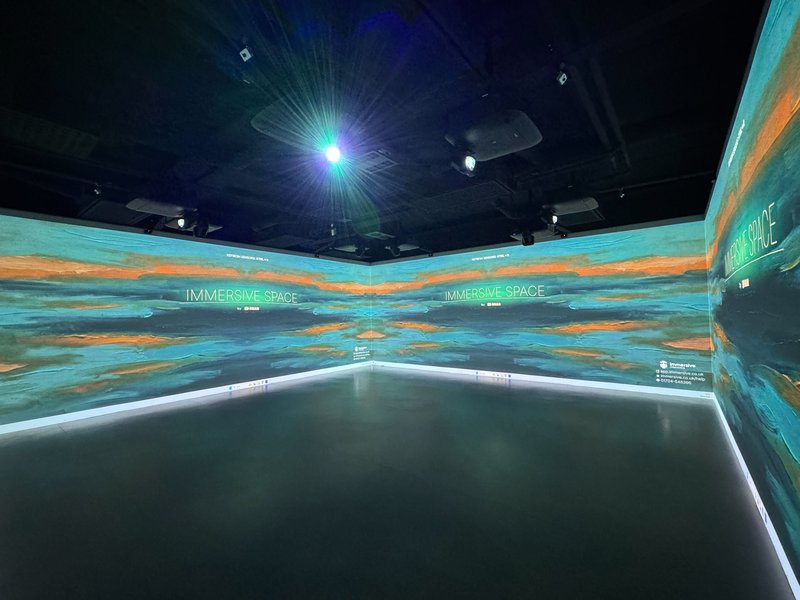
Development at OAMK continues. Next, floor projection will be added to the space, making the visual environment even more comprehensive. In addition, Insta360 cameras have been acquired for 360° content production — the goal is to create content specific to individual degree programmes that can be used widely.
In the longer term, OAMK sees the immersive environment as an investment that strengthens the competitiveness and attractiveness of the entire North Ostrobothnia region, as well as a platform for lifelong learning that serves students, teachers, and working professionals alike.
About this project
| Organisation | Oulu University of Applied Sciences (OAMK) |
| Field | Social and healthcare education, School of Wellbeing and Culture |
| Space | Immersive simulation and learning environment |
| Technology | Multisensory projection environment (wall projections, soundscapes, scents), software by 3DBear / Immersive Interactive |
| Project | MetaHealth Infra — project portfolio |
| Contacts | Mika Paldanius (Development Manager), Outi Kajula (Principal Lecturer) |
Want to talk more about immersive spaces?
We help plan and build an immersive space that meets your organisation's needs.