

AI-powered tools are sparking a great deal of discussion in schools. Many teachers see them as useful aids that can ease their workload and offer students new ways to learn. At the same time, questions arise: is AI safe, what impact does it have on learning, and how should it be used responsibly?
In this article, we explore the opportunities AI offers for education — and the concerns surrounding its use. Above all, we focus on how AI shows up in teachers' everyday work: where it can genuinely lighten the load, where it raises questions, and what it can never replace.
AI as Support for Teachers' Daily Work
A teacher's day often continues long after lessons end: lesson planning, adapting exercises for different levels, assessment, and brainstorming easily eat into evenings. AI can ease this burden by offering suggestions for assignments, ideas for lesson structures, and model answers to support assessment. Even a small insight can save a teacher significant time — and above all, free it up for connecting with students.
Helsingin Sanomat recently reported on how Finnish teachers use AI for tasks like brainstorming argumentation exercises or visualizing imaginary species. It's not just about saving time — it's about enriching teaching in ways that traditional tools cannot offer.
The key is that AI doesn't take away what makes teaching human — but gives teachers the opportunity to spend more time on what cannot be outsourced: supporting students and genuine connection.
Student Engagement and Individualized Support
Engaging students is not easy: some are actively involved, but many easily fade into the background. AI can lower the threshold for participation by offering students a safe space to ask, experiment, and practice without fear of others' reactions.
Internationally, interesting examples already exist. For instance, Alpha School in the United States builds its entire learning pathway on AI: each student progresses individually, receives continuous feedback, and can see their own progress in real time. Thanks to this model, academic studies are completed in just a few hours per day, and the remaining time is spent on creative workshops and life skills. This reinforces exactly what teachers are looking for — less routine work and more time for guiding students.
This topic also came up recently when Alpha School's founder MacKenzie Price appeared on the Hard Fork podcast, discussing how AI can track student performance and adapt tasks to maintain motivation. When a student concretely sees their progress, it creates a sense of accomplishment — one of the strongest sources of motivation. Similar adaptive thinking is currently being tested at the national level: Estonia is launching its AI Leap program this year, bringing AI tools and teacher training into the everyday life of all schools.
AI can also facilitate differentiation. Every classroom has students who need more support and those who crave additional challenges. A study published in the Estonian Frontiers in Education describes how AI can help teachers identify students' strengths and weaknesses and adapt teaching accordingly. This doesn't eliminate teacher assessment or decisions — it provides additional information about the classroom situation to support decision-making.
Safe Practice Before Real Life
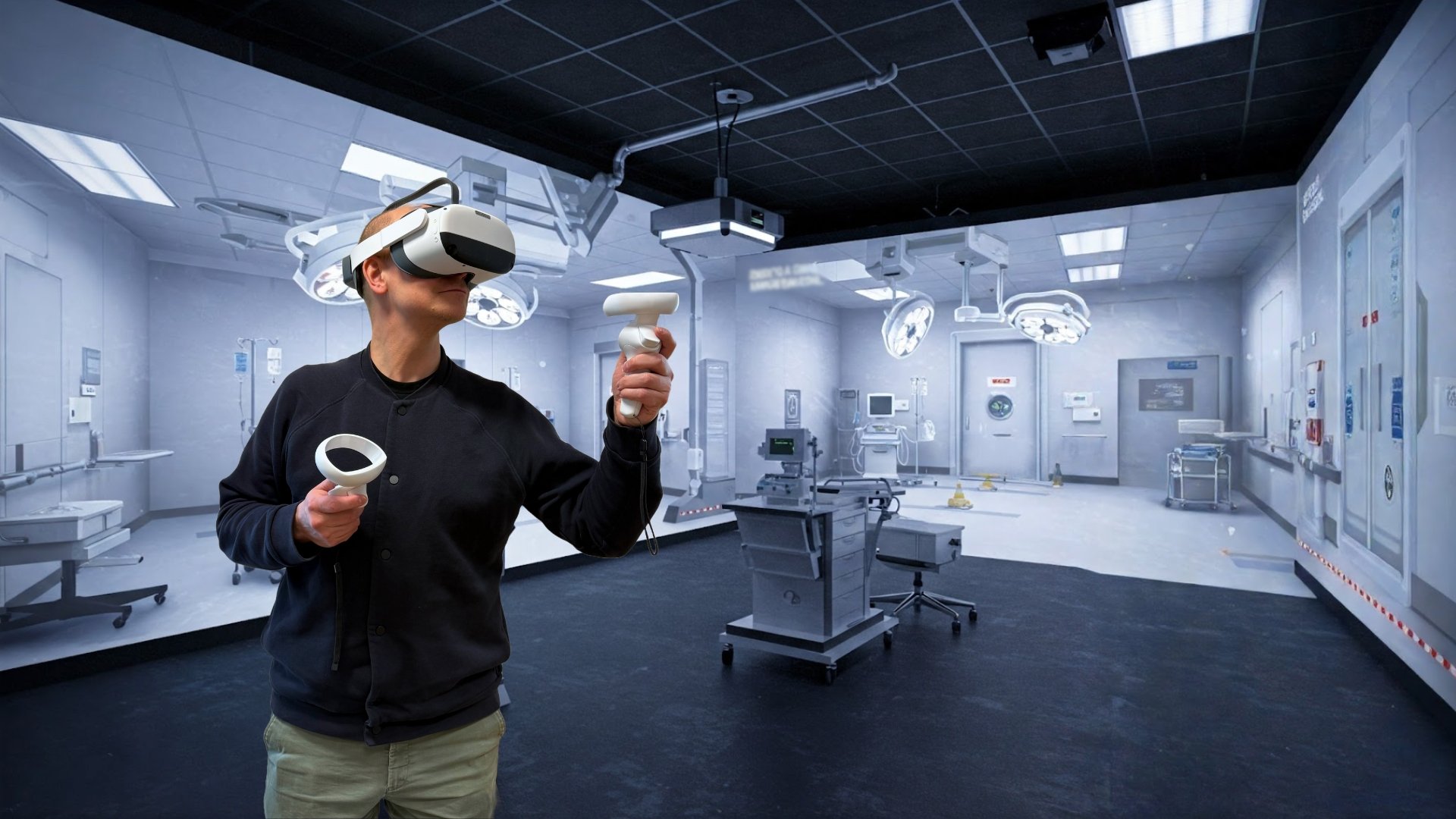
One of the most promising opportunities relates to simulations. In AI-powered learning environments, students can practice real-life situations safely and in a controlled manner. Mistakes become part of learning, not risks to be avoided at all costs. At the same time, teachers get a clear picture of students' progress.
An international OECD report emphasizes that simulations and other innovative technologies can strengthen vocational education by providing a safe space for skills practice and transferring competence to working life more effectively.
This idea is put into practice by Simuna, which allows students to practice scenarios such as care situations or customer encounters without the pressures of real working life. Simuna gives teachers a tool to monitor learning and ensure that every student gets a safe opportunity to try, make mistakes, and succeed.
The Teacher's Role and Ethical Use of AI
Many teachers wonder whether AI can replace their work. In reality, AI is not capable of empathy or individually knowing students. AI can support teaching, but guiding students and building connections are things only a teacher can do.
There are also risks in using AI. Students may try to use it as a shortcut for completing assignments, and tools sometimes produce biased or incorrect answers. That's why it's important for schools to teach students critical and ethical attitudes toward AI. The goal isn't just to prevent misuse, but to give young people the skills to understand and use technology responsibly — a skill they'll need in further education and working life. Ultimately, it's the same media literacy we've been discussing for the past two decades — only the tools are changing.
This is also emphasized in Estonia's AI Leap program, where alongside technology adoption, teachers are trained to ensure AI is used responsibly and in ways that strengthen students' critical thinking.
Summary: AI as a Teacher's Partner
AI is neither a shortcut nor a substitute, but when used correctly, it can make teaching smoother and more rewarding. It can lighten the everyday burden, support student motivation, and provide opportunities to practice situations safely before entering working life. When benefits and risks are recognized, AI can become a teacher's trusted partner — a tool that frees up time for what matters most: connecting with and guiding students.
If you'd like to discuss this further or see how Simuna works in practice, feel free to contact us. You'll find Anna's contact details below.
Anna Rantapero-Laine, COO
+358 400 550 434
anna@3dbear.fi